

- Table of contents

Weekly newsletter
No spam. Just the latest releases and tips, interesting articles, and exclusive interviews in your inbox every week.
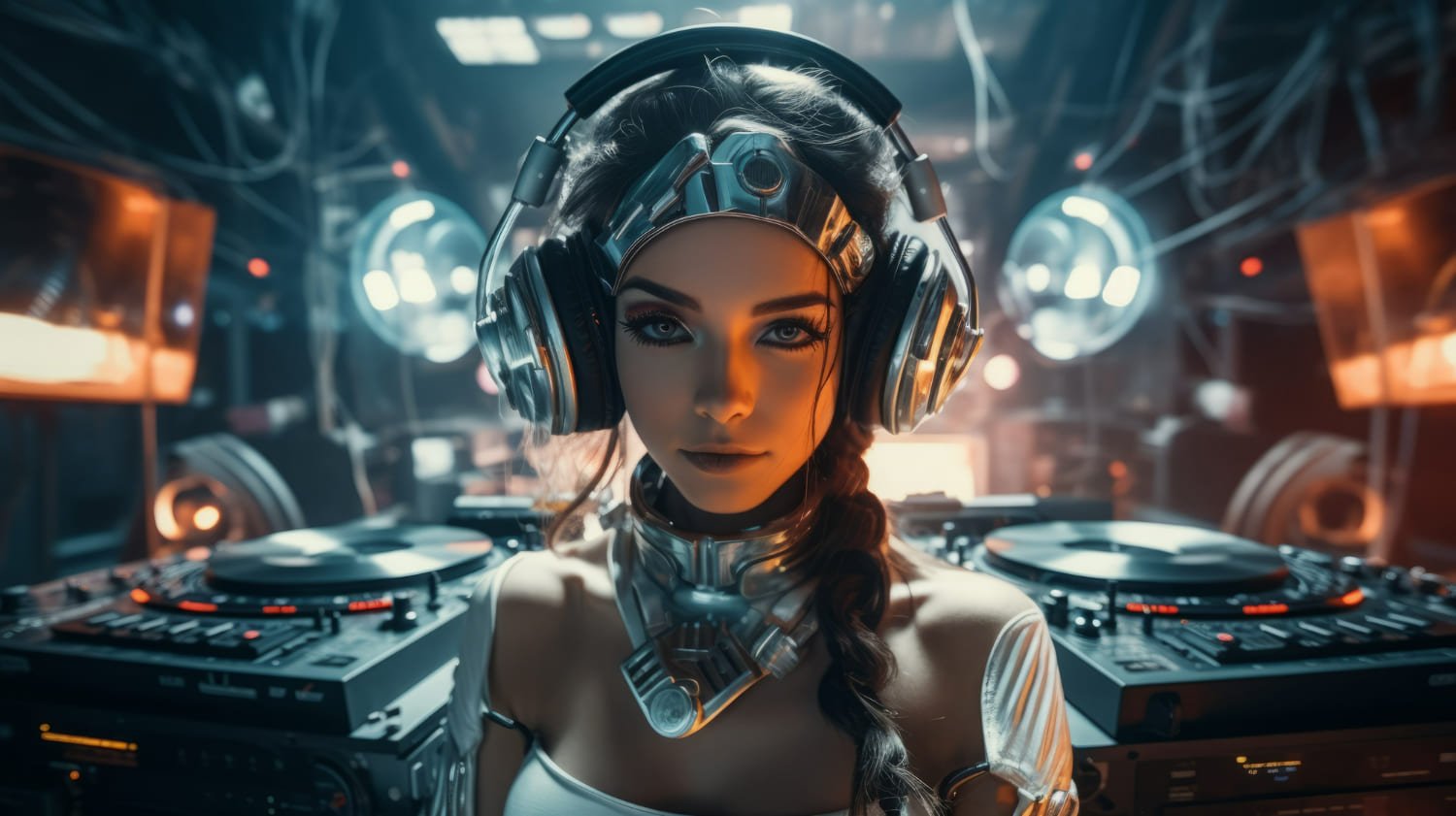
Music Styles Best Generated by AI
Artificial Intelligence (AI) is rapidly transforming the music industry, influencing every stage from creation to distribution. Musicians are increasingly integrating AI tools into their workflows. According to recent studies, 60% of musicians already use AI in their music projects, and 36.8% of professional producers have incorporated AI into their production process. This indicates that AI is becoming a standard tool in the music industry—on par with digital keyboards or recording software. AI is being used for songwriting, track mixing, and even for creating visual assets such as album covers.
The current momentum of the AI music market reflects a strong economic incentive driving the industry forward—despite existing ethical and legal challenges. While there are serious debates around copyright and the originality of AI-generated music, the rapid market growth and widespread adoption of AI among musicians point to the inevitability of its continued integration. The industry is actively looking for ways to overcome these obstacles rather than halting progress, which reflects a strong belief in AI’s creative potential.
Lo-fi and Ambient — Ideal for AI Generation
Lo-fi and ambient genres have proven exceptionally well-suited for AI-generated music due to their unique characteristics.
Lo-fi: This genre is defined by its relaxed, “low-fidelity” production, often featuring elements like vinyl crackle, tape hiss, and background noise. It embraces imperfections, creating raw, unpolished soundscapes that evoke nostalgia and intimacy. Lo-fi is commonly used as background music for studying, working, or relaxing. Its loop-based nature and short patterns make it easy for AI to generate.
Ambient: Ambient music typically lacks a defined rhythm, focusing instead on atmospheric tracks with dreamy pads and soothing drones. It’s perfect for yoga sessions, podcasts, meditation, or studying, offering a subtle yet immersive audio backdrop. The simplicity and repetitiveness of ambient music also make it an ideal match for AI generation.
Tolerance for “imperfection”: Unlike genres where a single wrong note might ruin a track, lo-fi and ambient music embrace—or even celebrate—“flaws” and “noise.” This lowers the demand for AI to be perfectly precise, allowing it to produce more “natural” results that mimic human quirks or recording artifacts.
This creates a unique synergy: the inherent limitations of AI—such as its tendency toward repetition or lack of “perfect” human performance—become strengths. AI can easily simulate these “imperfections,” making its outputs particularly organic and convincing in genres where polished human perfection may actually be undesirable.
Prompt and Audio Examples
Lo-fi:
Prompt Example:
“Craft a laid-back lo-fi track featuring gentle electric piano tones, smooth jazz-inspired guitar licks, and stripped-down drum rhythms. Add subtle vinyl crackle and ambient textures to evoke a calm, reflective atmosphere.”
Audio Description:
The result is expected to be a mellow, loop-based instrumental track with signature vinyl noise, muted percussion, and simple, repetitive melodies played on piano or guitar. The sound will be soft and slightly “gritty” (in the charming, intentional lo-fi way), making it ideal for background listening during studying or relaxation.
How AI Handles Rock and Rap:
While AI has shown impressive results in generating lo-fi and ambient music, more complex and emotionally charged genres like rock and rap present significant challenges.
Rock
Rock music demands strong dynamics, emotional depth, virtuosic guitar solos, expressive vocals, and intricate song structures. It often relies on raw emotion, improvisation, and the energy of live performance—all areas where AI faces considerable limitations.
There is high technical complexity and low tolerance for error. Rock tracks are layered and require long-term coherence. Even the slightest off-note or timing inconsistency is easily noticeable. AI struggles to maintain internal consistency throughout a full-length song, often resulting in repetitive or disjointed outputs.
AI also lacks emotional depth and originality. While it can generate technically correct music, it often fails to convey the subtle nuances of human emotion, personal experience, and cultural context—key elements in rock music. As a result, AI-generated rock can sound flat or predictable, lacking the “drive” and charisma of a live rock band.
Moreover, the datasets required to train AI are often protected by copyright. Using well-known rock tracks as training data can lead to copyright violations, and the music industry has little tolerance for such infringements. This creates a significant legal minefield for AI developers.
Example rock prompt:
“Produce an adrenaline-pumping rock instrumental packed with hard-hitting electric guitar riffs, thunderous drums, and a relentless bassline. The sound should be fierce and intense, perfect for an action-packed workout or a fast-paced chase sequence.”
Audio description:
AI can generate technically accurate guitar riffs and powerful drum sequences. However, it will likely lack the “soul” of human-performed solos, the improvisational flair, and the emotional progression that characterize authentic rock performances. The track may sound somewhat mechanical or repetitive, falling short of the raw energy and charisma of a real rock band.
Rap
Rap music is exceptionally complex due to its reliance on multilayered lyrics, intricate rhythmic patterns (flow), cadence, intonation, and deep cultural context. These elements are key to the genre’s authenticity and expressive power.
Key Challenges for AI in Rap:
One of the main challenges for AI in rap is generating coherent and emotionally resonant vocals. While AI can create beats and even basic lyrics, replicating an authentic rap flow that conveys emotion, personal experience, and cultural nuance is a major hurdle. Studies show that AI-generated vocals still struggle with emotional depth and subtlety, making them less compelling than human performances.
There’s also the issue of oversaturation and uniformity. Some sources point out that “lo-fi hip hop” has already become a “hellscape” for algorithms, where “anyone can prompt a machine to spit out a ‘lo-fi beat’ in seconds without understanding the feel of the samples.” This highlights the risk of homogenization and the loss of originality, as AI can generate large volumes of similar content that flood the market. Additionally, technical artifacts can make AI-generated music more difficult to detect, as neural decoders often produce specific distortions typical of transposed convolution operations.
Example rap prompt:
“Craft a raw and intense East Coast hip hop beat featuring deep 808 bass, sharp snare-driven drums, and a moody piano loop. Aim for a dark, atmospheric soundscape that sets the tone for gritty, street-oriented storytelling.”
Audio description:
AI will likely succeed in generating a powerful beat with deep 808s and crisp drums. However, the vocal part may sound less natural, with a limited range of emotion and flow that doesn’t match the complexity of human-delivered rap. The result may lack improvisation and spontaneity—crucial elements of the genre.
The Gap Between Technical Skill and Artistic Expression
In genres like rock and rap, there is a noticeable gap between technical proficiency and artistic expressiveness. AI may be capable of generating technically complex beats and instrumental sections, but it often lacks emotional depth, personal experience, and cultural context. In essence, AI can produce music that is technically correct, but it struggles to create music that resonates emotionally and culturally. For genres that rely heavily on human expression, AI may serve as a powerful tool for initial generation or production assistance, but the final polished product with true artistic value still requires significant human involvement and creativity.
The Future: Human-AI Collaboration
Despite current limitations, the future of music creation likely lies in close collaboration between humans and AI. AI is not a replacement for human creativity, but rather a powerful tool that can enhance and expand a musician’s capabilities.
AI as a Tool for Inspiration and Creative Breakthroughs
Rather than acting as a competitor, AI can serve as a powerful tool for musicians by offering inspiration and aiding the creative process. It can generate new ideas, melodic lines, chord progressions, or drum patterns, helping artists overcome creative blocks. Musicians can use AI to produce rough drafts, which they then refine and personalize with their own creative input and emotional expression.
Democratizing Music Creation
AI tools make music production more accessible to a wider audience, including those without formal musical training or technical expertise. They lower financial and technical barriers, enabling more people to create music of professional quality. This shifts the role of the musician from “creator from scratch” to “curator and collaborator.” AI can generate music faster and more efficiently than humans, allowing artists to focus on higher-level “strategic” and “expressive” decisions. The future of music creation will likely follow a hybrid model, where musicians become “curators” and “collaborators” with AI—using it to generate base ideas, experiment with styles, and automate repetitive tasks, then adding their own artistic signature, emotional depth, and personal narrative—elements that machines cannot replicate.
For those interested in exploring AI music creation, there are many platforms available, each offering unique possibilities.
Conclusion
While AI can generate technically polished music, it still lacks emotional richness, personal experience, and intuitive insight—elements essential to human creativity. This suggests that AI is a master of imitation and recombination, not a true source of original, emotionally resonant art. The future of music likely lies in the synergy between human and machine, where AI serves as a powerful tool for inspiration, automation, and democratization. The human touch remains irreplaceable for crafting truly deep, original, and emotionally impactful works that resonate with listeners.
Continued exploration and experimentation with AI tools is encouraged—with an awareness of their strengths and limitations. This will help musicians and enthusiasts make the most of AI’s potential while preserving the unique value of human creativity.
Learn and Discover
See All


